
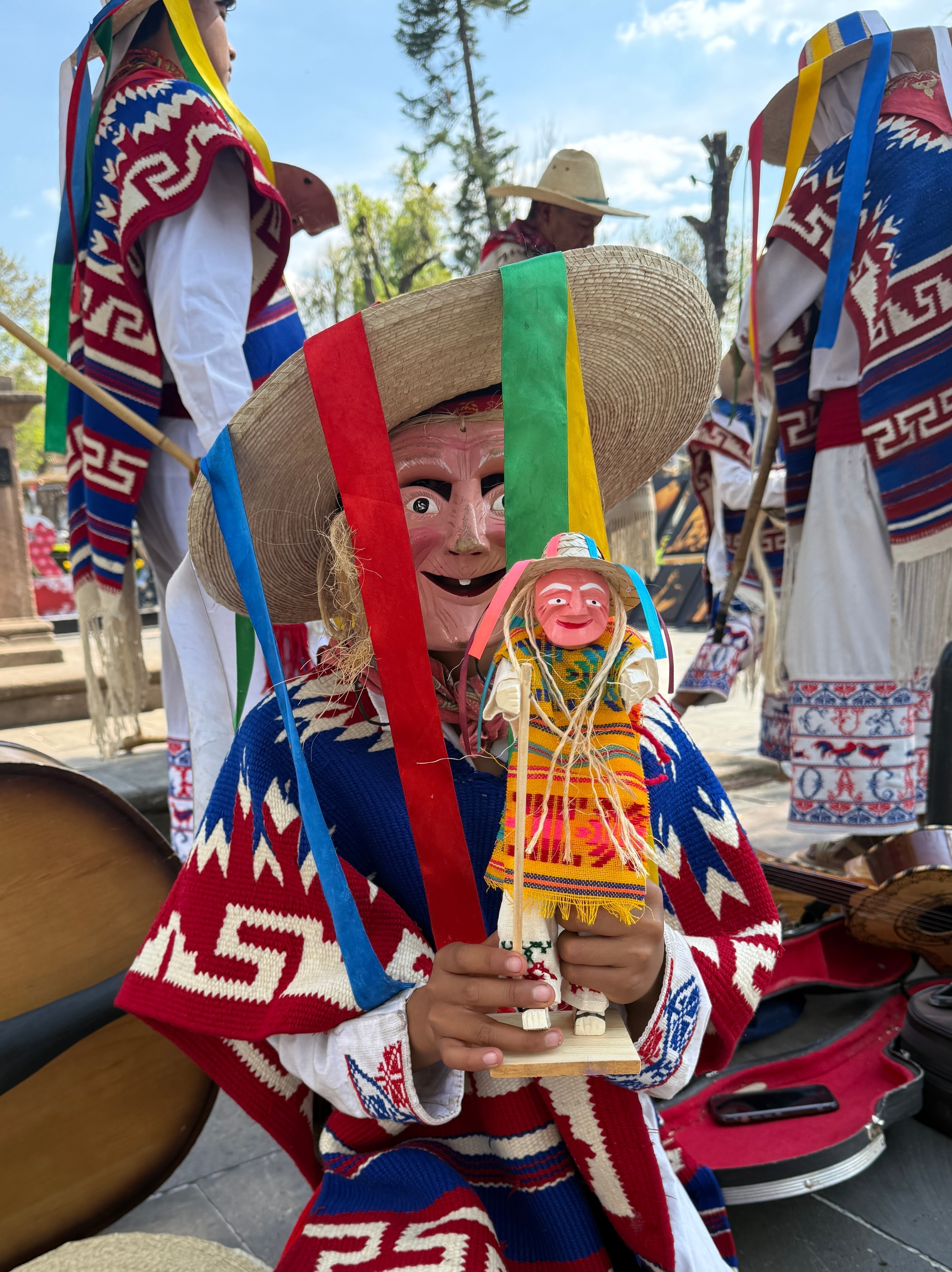
La Danza de los Viejitos (The Dance of the Old Men)

Come along with me as we travel to Michoacán, Mexico. A state filled with tradition, rich history, and stunning textiles. More specifically, tag along to learn about these fun wooden figures of Viejitos and how they came to be.
Growing up, I often had the opportunity to experience La Danza de los Viejitos (The Dance of the Old Men), whether it was at a festival or on a town’s main plaza. I’ve always thought of it as a very entertaining and unique dance, capturing viewers of all ages. This dance has become one of Mexico’s most emblematic folk dances, and it is a beautiful blend of ancient spirituality and colonial history. Originating in the Purépecha culture of Michoacán and Jalisco (my home state), the dance was originally known as T'arche Uarakua. In pre-Hispanic times, it was a sacred offering to the Sun God (Tata Jurhiata) to ensure a bountiful harvest. Traditionally, only the petámunis—the community's four wise elders—were permitted to perform it.

Following the Spanish Conquest, the dance was prohibited but survived in secret. Over time, its religious meaning evolved into a clever satire of the Spanish colonizers, mocking their mannerisms and aging process.
Today, the dance is a vibrant display of cultural pride. While the dancers wear masks of elderly faces and carry rustic wooden cane, the performance is anything but slow. The dance remains a powerful symbol of resilience and renewal, proving that even ancient traditions can find new life in a changing world.
I recently got to see this dance in Patzcuaro, Michoacán performed by a family from Jaracuaro, a small town just outside of the city. Being part of their performance, now with my one year old son, transported me back to my childhood.
After the performance, I met Kevin, the second youngest of the group (the group is made up of Kevin's dad, older and younger brothers, and a couple of his uncles). He was selling handcrafted wooden Viejitos and Viejitas representing the dance he had just performed and I could not resist. Each figure has its unique personality as their articulated arms and legs allow you to have fun with them. Check out our collection!



Leave a comment
This site is protected by hCaptcha and the hCaptcha Privacy Policy and Terms of Service apply.